
Effectiveness of Problem-based Learning on Mathematisation of Middle School Students
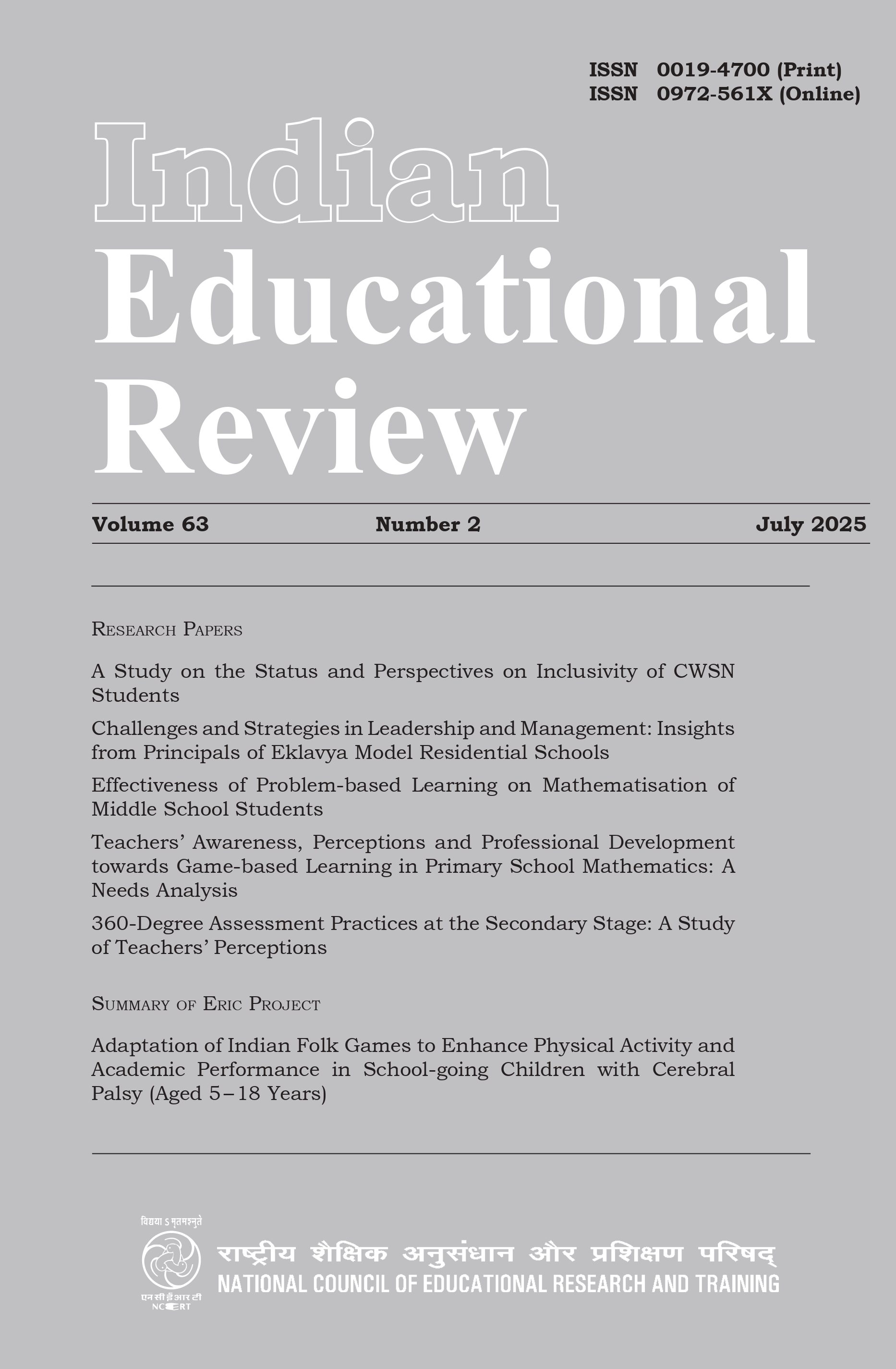
Published 2026-04-07
Keywords
- Real-world Problems,
- Problem-based Learning,
- Mathematisation and School Mathematics
How to Cite
Abstract
The present study examines the effect of problem-based learning on mathematisation of middle school students. Experimental method followed by a pre-test and post-test control group design was employed. Forty four Grade 8 students, age ranged from 11 to 14 years, from a rural middle school, located in a district of Bihar were selected in the experimental and control group randomly. The experimental group students were taught by real-world problem-based mathematics activities, and control group by the traditional method. Self-developed mathematisation ability and mathematical intelligence tests were used to collect the data from the participants. Analysis of covariance and t-test were used to analyse the data. The findings of the study revealed that, real-world problem-based mathematics learning significantly enhanced the process of mathematisation, along with its dimensions namely understanding, organising, transforming, employing, and generalising than the traditional method. The findings underscore the significance of integrating real-world mathematics problems in school Mathematics curricula to enhance mathematisation process of students. Every teacher should learn how to mathematise, internalise it, and subsequently transact the procedure which should be reflected in the Mathematics curriculum.