
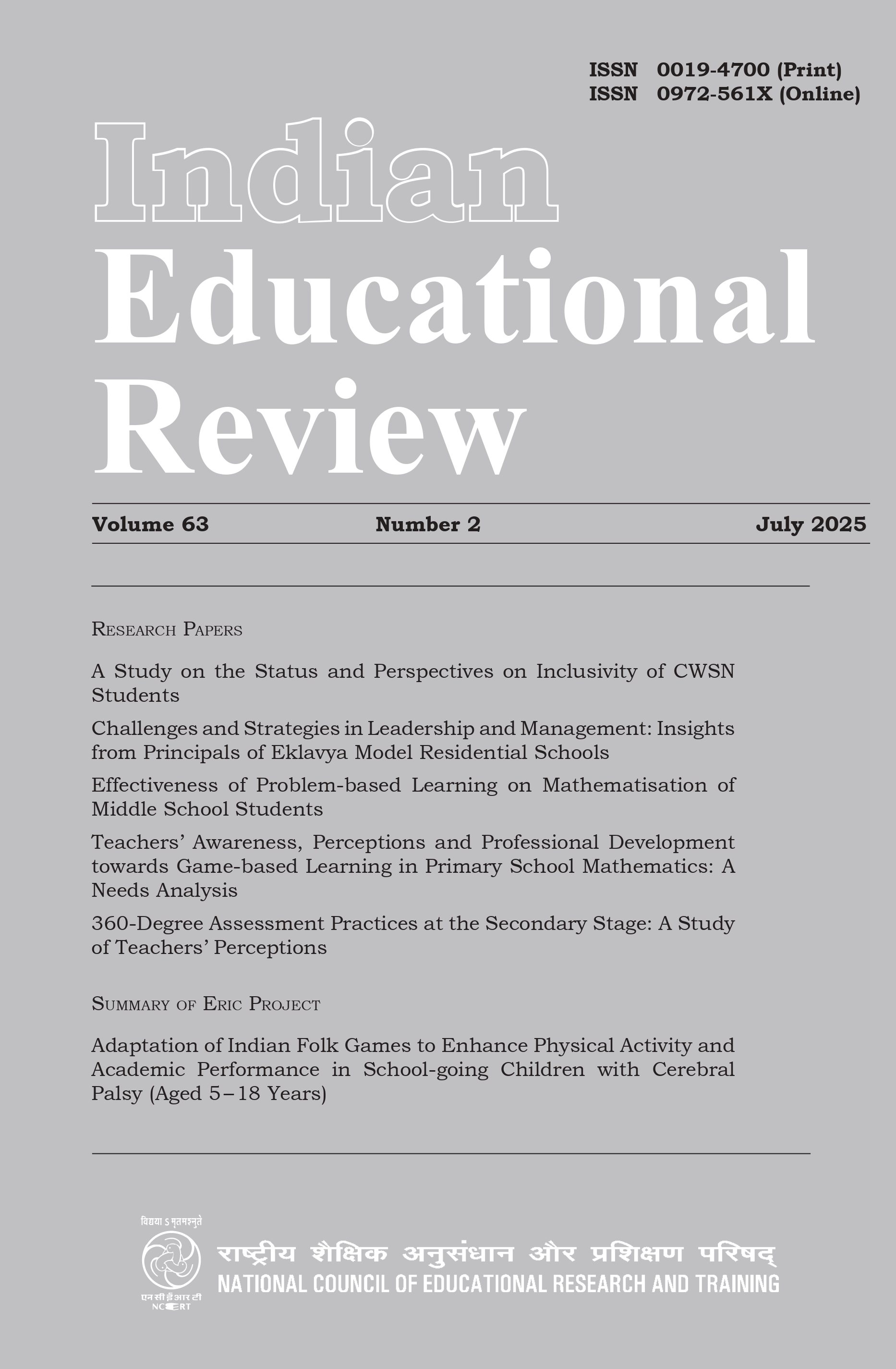
Challenges and Strategies in Leadership and Management: Insights from Principals of Eklavya Model Residential Schools
Published 2026-04-07
Keywords
- Eklavya Model Residential Schools,
- Tribal School Leadership,
- Educational Quality
How to Cite
Abstract
Principals of Eklavya Model Residential Schools (EMRS) face significant challenges, including inadequate infrastructure, teacher shortages, financial constraints, and socio-cultural barriers. This study explored these challenges through descriptive research, employing a structured questionnaire to gather data from 30 respondents in leadership roles across the EMRS. The findings revealed scarcity in staffing, resource management, and gaps in governance, which impede the delivery of quality education. Additionally, behavioral issues among students and limited community participation complicate school operations. Despite these challenges, notable achievements, such as high success rate in the board examinations and innovative academic programmes underscore the transformative potential of effective leadership. This research emphasises the need for systemic reforms, including timely fund allocation, capacity-building initiatives, and streamlined governance, to enhance the operational efficiency and impact of the EMRS. By aligning with Sustainable Development Goal (SDG) 4, and the equity, inclusion, and quality imperatives outlined in the National Education Policy (NEP) 2020, the findings highlight the critical role of adaptive and collaborative leadership in empowering tribal communities through education. These insights provide a roadmap for policymakers and educators to foster a more inclusive and equitable educational landscape. These findings suggest systemic changes are necessary, including prompt fund distribution, National Education Society for Tribal Students (NESTS) centred governance, transparent policy frameworks, and continuing capacity-building programmes.