
Published 2026-07-09
Keywords
- Scientific Attitude,
- Solar System,
- Theory of Relativity
How to Cite
Abstract
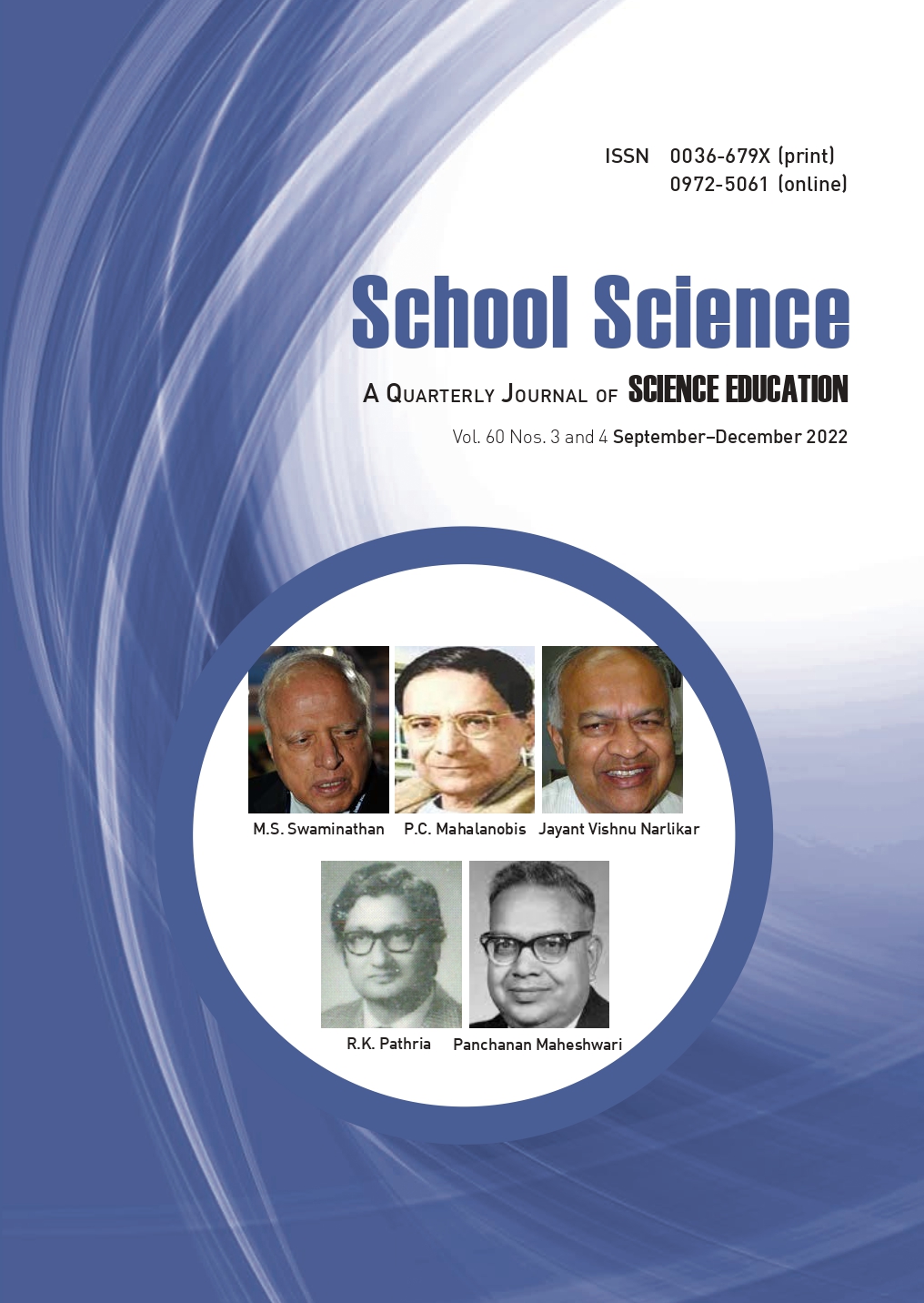
Prof. Jayant Vishnu Narlikar is an Indian astrophysicist, known for giving the conformal gravity or the Hoyle–Narlikar theory. He worked on some important problems of astronomy, including gravitational collapse and a new theory of gravitation. He has received many national and international awards and accolades including the Padma Vibhushan. Apart from his contribution through research work, Prof. Narlikar is well known as a communicator of science through his lectures, books, articles and radio and television programmes. He currently serves as an Emeritus Professor at the Inter-University Centre for Astronomy and Astrophysics. The paper is an excerpt from the Jawaharlal Nehru Memorial Lecture delivered by Prof. J. V. Narlikar in New Delhi on 13November, 1976 on the topic “The Role of Scientific Outlook in Development of Science and Technology.” In his lecture, Prof. Narlikar emphasises upon the essence of the scientific process and approach. Narlikar highlights the importance of creativity and originality in science. By providing the example of historical context of planetary motion, he talks about how with empirical evidence, scientific outlook replaced supernatural explanations. He addresses the revisability of scientific laws, using Einstein’s Special Theory of Relativity as a case where new theories emerged from experimental conflicts with established laws. Narlikar also discusses the conservative nature within the scientific community and the challenges posed by new discoveries. He critiques the presence of superstitions and the common man’s reliance on miracles and advocates for a rational, questioning attitude. Narlikar underscores the role of science in addressing societal issues, quoting Nehru’s belief in science as a solution to problems like hunger and poverty. The importance of basic research and the need for a scientific outlook in developing nations is emphasised, citing Dr. Homi Bhabha’s views on the value of fundamental research for societal progress. He concludes by reflecting on the limitations of human understanding in science, suggesting that current knowledge may be incomplete and hinting at future breakthroughs.