
Published 2026-10-23
Keywords
- Smart Classroom,
- Student Participation,
- Professional Development Training,
- Pedagogical Practices
How to Cite
Abstract
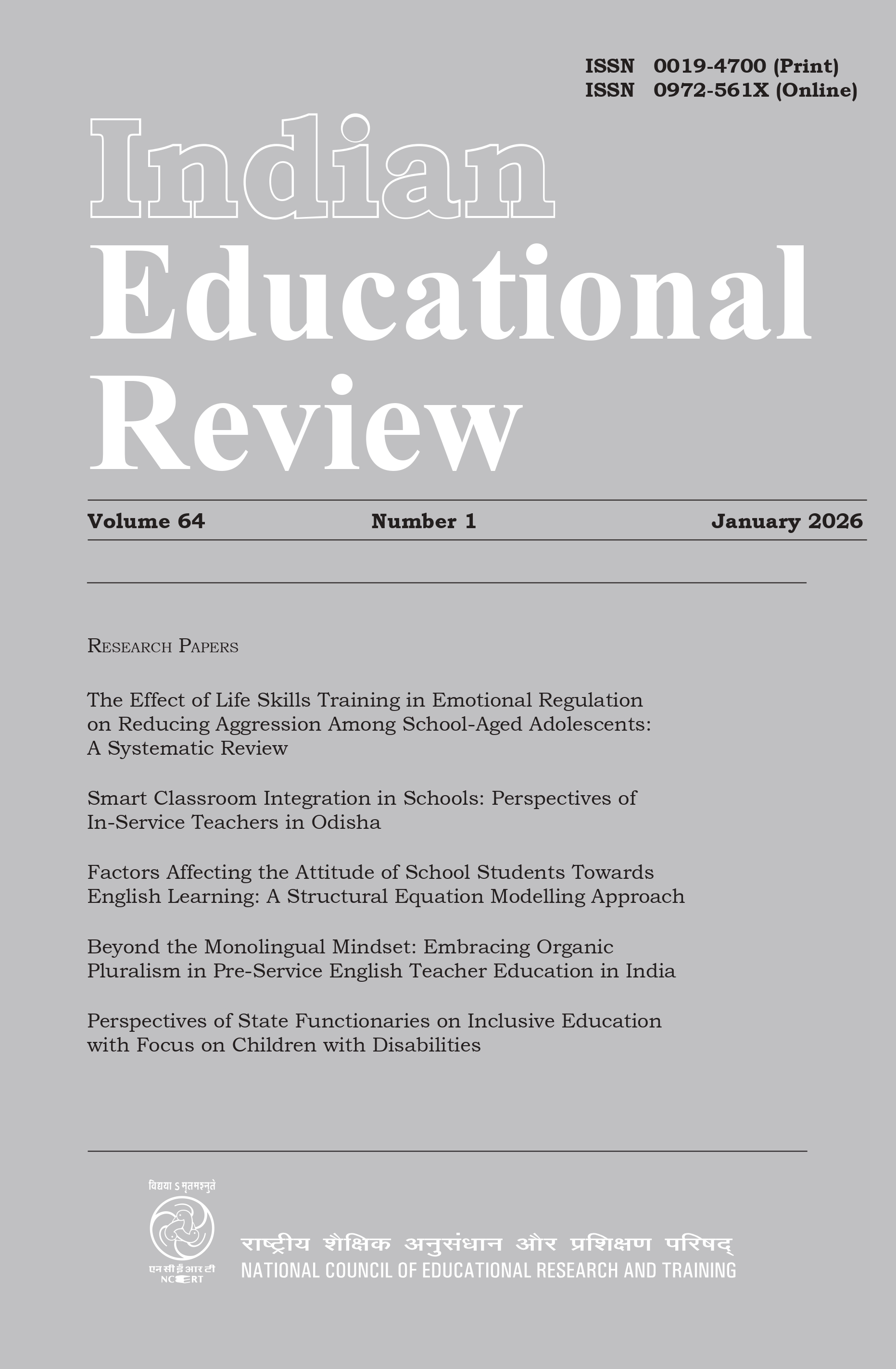
The study aimed to explore teachers’ perceptions of integrating smart classrooms, with special reference to the availability of resources, student participation, pedagogical practices, professional development training, and the problems and challenges encountered. An explanatory sequential mixed-method design was employed for data collection, and the data were analysed using percentage analysis, t-test, and ANOVA. The results revealed that a high majority of the teachers perceived that a smart classroom makes learning more enjoyable and has a significant impact on student participation. Research findings have shown that implementing a smart classroom has enhanced the teaching performance of secondary school teachers in Odisha. However, several obstacles, including technical issues, digital illiteracy, insufficient technical support, and health concerns, hinder the effective integration of the smart classroom. The NEP 2020 emphasises that technology can significantly improve educational processes and outcomes. Nonetheless, these challenges must be addressed at the appropriate level to fully harness the potential of technology in the classroom.